Source Industrial Trolley Pneumatic Rubber Wheel for Wheelbarrow Trolley
Compare 30 Industrial Trolley Pneumatic Rubber Wheel options from China suppliers. Find solid and pneumatic tires with customizable rims, various tread patterns, and ISO certifications for wheelbarrow, trolley, and agricultural applications.
Key considerations
Products List


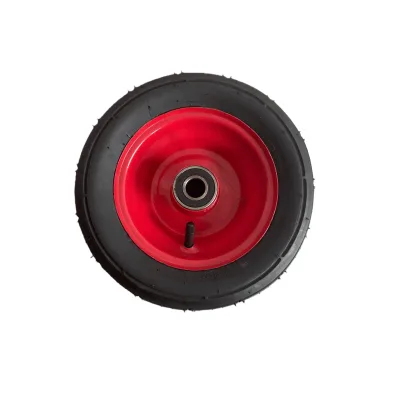
Pneumatic Rubber Wheel Air Tyre for Wheelbarrow Tire Trolley Wheel 6.00-6
$1.95 - $8.85
MOQ: 1000 Pieces


Industrial Folding Trolley with Pneumatic Wheels for Heavy Load Transport
$21.58 - $22.98
MOQ: 100 Pieces




Comprehensive Sourcing Guide
Strategic Sourcing Guide for Industrial Trolley Pneumatic Rubber Wheels
Selecting the right pneumatic rubber wheel for industrial trolley applications requires a rigorous understanding of material properties, load-bearing specifications, and supply chain reliability. The core keyword "Industrial Trolley Pneumatic Rubber Wheel" encompasses a diverse range of products designed for varying degrees of mobility, terrain, and durability. Buyers must navigate a market where specifications such as tire hierarchy, tread patterns, and rim materials vary significantly between listings. This guide provides a structured approach to evaluating these components, ensuring that procurement decisions are based on verified facts rather than unconfirmed marketing claims.
Technical Specifications and Material Composition
The foundation of a reliable industrial wheel lies in its material composition and structural design. The primary material observed in this category is rubber, specifically formulated to provide the necessary elasticity and grip for pneumatic applications. The tire hierarchy is a critical metric for load capacity; data indicates that a 6PR (Ply Rating) is a common specification for these wheels, suggesting a construction capable of handling moderate to heavy loads typical in trolley and wheelbarrow operations.
The tire design can vary between radial and diagonal configurations. Radial tires generally offer better heat dissipation and flexibility, which is advantageous for smooth surfaces and higher speeds, while diagonal tires provide robust sidewall strength suitable for rougher terrain. The tread pattern is another vital specification. Listings frequently reference a "Cross-Country Tread Pattern" or a "Horn Pattern," indicating designs intended for off-road or uneven ground conditions. Buyers must verify which pattern aligns with their specific operational environment, as a pattern optimized for cross-country travel may not provide the same stability on flat warehouse floors.
Dimensions and model numbers are essential for compatibility. The product models observed include a wide range of sizes such as 300-8, 400-6, 400-8, 350-8, 13x5.00-6, 4.00-8, 650-8, 10X3.50-4, 6.00-6, and 3.00-4. The diameter for certain models is specified as 13-14 inches, while others are defined by inch-based standards like 10 inch 4.10/3.50-4 or 15''x6.00-6. It is imperative to match the wheel diameter and width to the existing axle and frame specifications of the trolley to ensure proper fitment. The cord material, often identified as Nylon, contributes to the internal strength of the tire, preventing blowouts under pressure.
Rim Construction and Surface Treatments
The rim serves as the structural backbone of the wheel assembly, and its material and finish are crucial for longevity. The rim material is typically available in plastic or steel, with some listings specifying iron as an alternative. The choice between plastic and steel often depends on the required weight and corrosion resistance. Plastic rims may be preferred for lightweight applications or where electrical conductivity is a concern, whereas steel or iron rims offer superior strength for heavy-duty industrial use.
Surface handling is another key attribute to evaluate. Zinc plating is a documented surface treatment for these rims, providing a protective layer against rust and corrosion. This is particularly important for trolleys used in environments with moisture or chemical exposure. Buyers should verify the thickness and quality of the zinc plating, as this directly impacts the service life of the wheel in harsh conditions. Additionally, the rim color can be customized, offering opportunities for brand identification or safety color-coding within a facility.
Compliance, Certification, and Standards
Ensuring that the purchased wheels meet industry standards is a non-negotiable aspect of B2B procurement. The presence of ISO certification is a significant indicator of a supplier's commitment to quality management systems. While the specific ISO standard number is not always detailed in general listings, the assertion of ISO compliance suggests adherence to international quality benchmarks. Buyers should request the specific certification documents to verify the scope of the certification and its validity.
Packaging standards also play a role in compliance and logistics. Products are observed to be packed in bags, cartons, or on pallets, with some suppliers offering customized packing according to customer requirements. The standard packaging dimensions noted in the data include 40.00cm * 40.00cm * 60.00cm, which is useful for calculating shipping costs and warehouse storage needs. However, buyers must confirm if these dimensions apply to the specific model they are ordering, as packing can vary based on the wheel size and quantity.
Cost Drivers and Pricing Dynamics
The pricing for industrial trolley pneumatic rubber wheels is influenced by several factors, including material costs, customization levels, and order volume. The observed price range in the market spans from 0.7 to 22.98 USD. This wide variance suggests that price is heavily dependent on the specific model, rim material, and whether the product is customized. Smaller wheels like the 3.00-4 or 300-8 likely fall at the lower end of the spectrum, while larger, more complex models such as the 13x5.00-6 or those with specialized tread patterns may command higher prices.
Minimum Order Quantity (MOQ) is a significant cost driver. The observed MOQ range is between 100 and 2000 units. Suppliers with higher MOQs may offer better unit pricing, but this requires a larger upfront capital investment. Buyers must balance their inventory needs with cash flow constraints. Customization options, such as specific rim colors or unique tread patterns, can also increase the unit cost and potentially raise the MOQ threshold. Understanding these variables is essential for accurate budgeting and total cost of ownership analysis.
Typical Applications and Usage Scenarios
The versatility of pneumatic rubber wheels makes them suitable for a broad spectrum of industrial applications. The primary usage identified is for wheelbarrows and trolleys, which are ubiquitous in construction, agriculture, and logistics. The "Byword" associated with these products often includes Pneumatic Tire, Wheelbarrow Tire, and Agricultural Tire, highlighting their adaptability across different sectors.
The specific application dictates the required specifications. For agricultural use, the Cross-Country Tread Pattern is essential to navigate uneven fields and soft soil. In contrast, trolleys used in warehouses or factories may benefit from a smoother tread or a diagonal tire design for better maneuverability on hard surfaces. The condition of the product is listed as "New," which is standard for industrial procurement, but buyers should ensure that the "New" status includes all necessary components like valves and rims. The classification as "Tires" and "Rotating Wheel" confirms their function in mobility systems where rotation and load distribution are critical.
Supplier Evaluation and Geographic Considerations
When evaluating potential suppliers, geographic origin and market reach are important factors. The primary place of origin for these products is Shandong, China, with specific mentions of Qingdao as a production hub. This region is known for its manufacturing capabilities in rubber and metal products. The main markets for these wheels include North America, South America, Eastern Europe, and a global reach described as "All Over The World."
Suppliers in this region often offer customization services, allowing buyers to tailor the product to their specific needs. The availability of customization for rims, colors, and packing indicates a flexible supply chain. However, buyers should exercise caution regarding the consistency of quality across different batches. Verifying the supplier's ability to meet the "As customer's requirements" standard is crucial. Additionally, the lead time, observed as 1 month for delivery, should be factored into the procurement timeline. Buyers must confirm if this lead time is consistent for their specific order volume and customization requirements.
Quality Control and Long-Term Procurement Strategy
Quality control is paramount to ensuring the longevity and safety of industrial trolley wheels. The warranty time observed is 3 months, which serves as a baseline for product reliability. However, buyers should not rely solely on the warranty period. Instead, they should implement a rigorous incoming quality inspection process. This includes checking the tire hierarchy, verifying the cord material, and inspecting the surface handling of the rims for defects.
Long-term procurement considerations involve building a relationship with suppliers who can consistently deliver high-quality products. The ability to customize the product, such as selecting specific tread patterns or rim materials, allows for optimization over time as operational needs change. Buyers should also consider the environmental impact and disposal of worn-out tires, although this is often a secondary concern compared to immediate performance.
To facilitate decision-making, the following table summarizes key attributes observed in the market:
| Attribute Category | Observed Specifications | Verification Requirement |
|---|---|---|
| Material | Rubber, Nylon Cord | Confirm rubber compound grade and nylon strength. |
| Tire Type | Pneumatic, Solid, Radial, Diagonal | Match tread pattern (Cross-Country/Horn) to terrain. |
| Dimensions | 300-8 to 13x5.00-6, 13-14" Diameter | Verify exact fitment with existing trolley axles. |
| Rim Material | Plastic, Steel, Iron | Assess corrosion resistance and weight requirements. |
| Surface Finish | Zinc Plated | Check plating thickness for durability. |
| Certification | ISO | Request valid ISO certificate documentation. |
| MOQ | 100 - 2000 Units | Negotiate based on volume and customization. |
| Lead Time | 1 Month | Confirm timeline for custom orders. |
| Warranty | 3 Months | Understand terms and coverage limits. |
In conclusion, sourcing industrial trolley pneumatic rubber wheels requires a meticulous approach that balances technical specifications with supply chain realities. By focusing on verified attributes such as material composition, rim construction, and certification status, buyers can mitigate risks and ensure the procurement of high-quality components. The flexibility offered by suppliers in terms of customization and packaging further enhances the value proposition, provided that quality control measures are strictly enforced. Ultimately, a strategic partnership with a reliable supplier in the Shandong region can provide the consistency and performance necessary for industrial operations.
FAQs
What materials are used for the tire and cord?
The tire is made of rubber with a nylon cord material for internal strength. This combination provides elasticity and prevents blowouts under pressure during industrial trolley operations.
Which rim materials are available for customization?
Rims are available in plastic, steel, or iron, with colors that can be customized. Buyers can select based on weight requirements and corrosion resistance needs for their specific application.
What is the minimum order quantity for these wheels?
The minimum order quantity ranges from 100 to 2000 units depending on the supplier and customization level. Smaller orders may face higher unit costs or limited model availability.
How long is the delivery time for standard orders?
The typical delivery time is one month for standard orders. Customized requests or large volume orders may require additional time to ensure quality and production scheduling.
Can the tread pattern be selected for specific terrain?
Yes, tread patterns like Cross-Country or Horn are available to suit different terrains. Buyers should choose Cross-Country for off-road use and Horn for varied ground conditions.
What certifications do the manufacturers hold?
Manufacturers hold ISO certification indicating adherence to international quality management standards. Buyers should request specific documentation to verify the scope and validity of this certification.
What is the warranty period for the wheels?
The warranty period is three months for the purchased wheels. This covers defects in material or workmanship but does not replace the need for rigorous incoming quality inspections.